

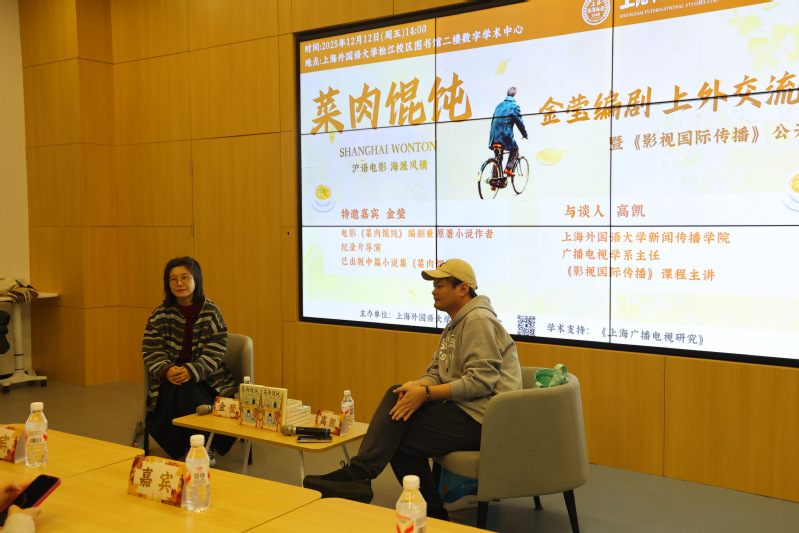
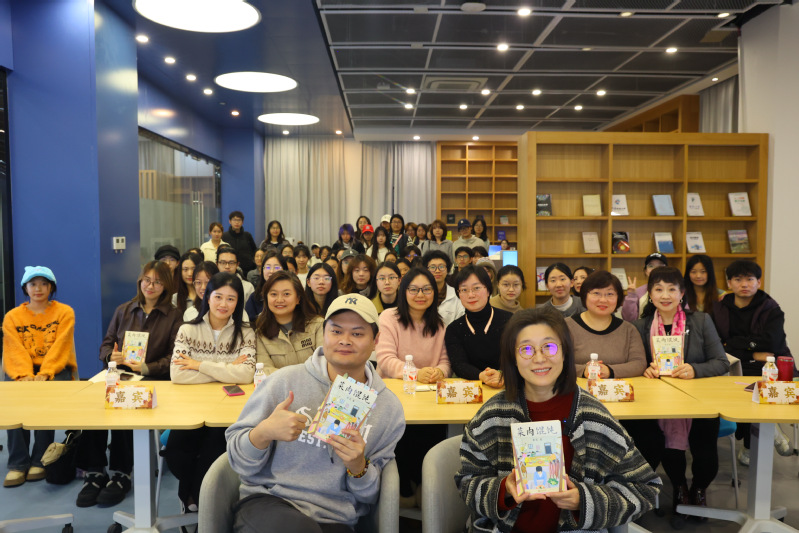
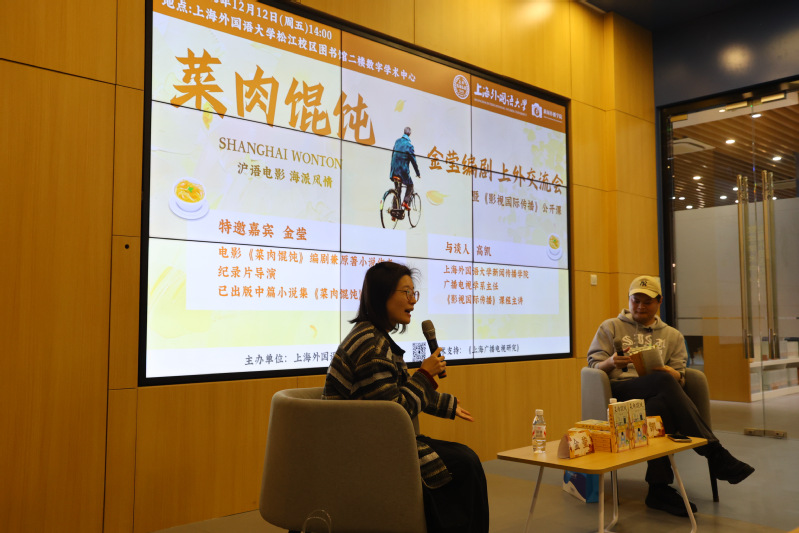
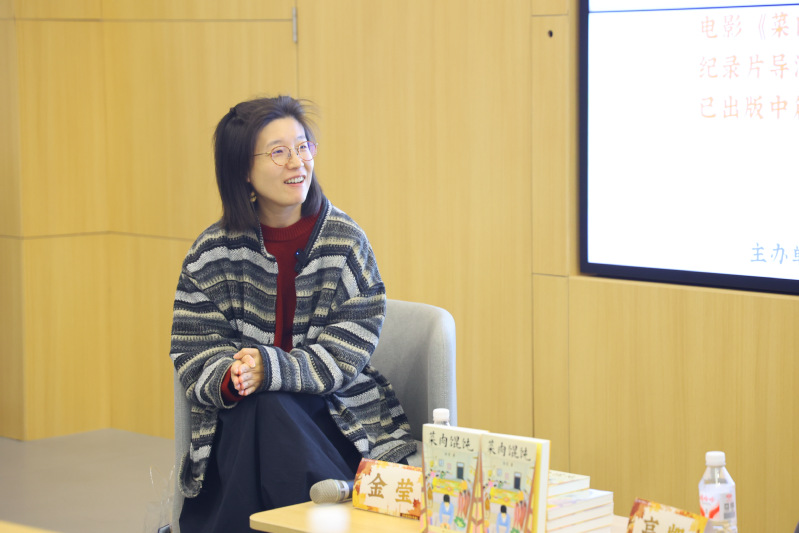
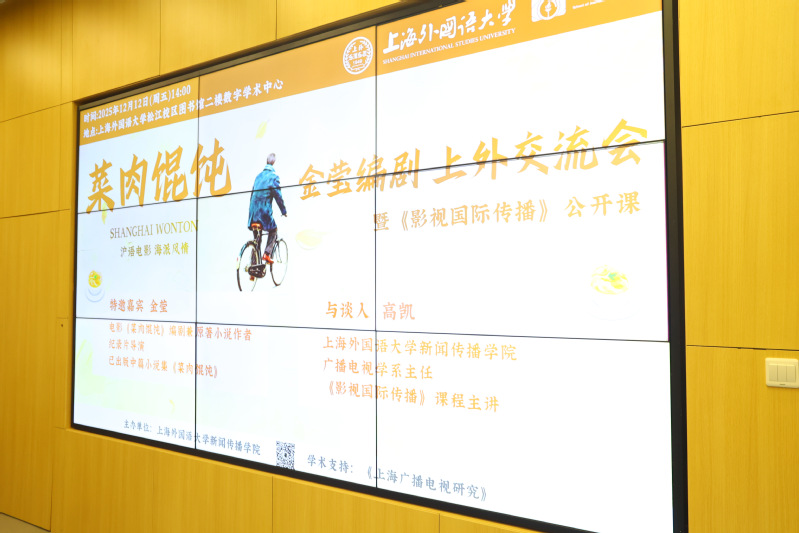
Jin Ying, screenwriter and original author of Shanghai Wonton, delivered a guest lecture at Shanghai International Studies University (SISU) on December 12, 2025, as part of the open class for International Film and Television Communication. The session took the form of an in-depth dialogue between Jin and course instructor Dr. Gao Kai.
In his opening remarks, Dr. Gao emphasized that the event was conceived as an academic exchange rather than a conventional media interview. Through close readings of Shanghai Wonton, he highlighted narrative details such as Bee & Flower sandalwood soap and a transparent umbrella, illustrating how everyday objects can serve as vessels of urban memory and emotional connection.
Jin explained that many of these details stemmed from her more than two decades of experience in documentary filmmaking. This background, she noted, shaped her commitment to realism, attention to everyday textures, and what she described as “breathing space” within the narrative. She also discussed the film’s character development, revealing that certain roles evolved during production in response to the performers themselves. The character A Fang, for instance, was adjusted to align with actress Wang Lin’s performance style.
During the discussion, Dr. Gao shared written reflections from students enrolled in the course. Several students noted the film’s focus on elderly characters and its nuanced portrayal of family relationships. Jin said she found these interpretations deeply meaningful as a creator. The session also featured a brief musical interlude by faculty member Peng Mei, who performed Late Arrival, a song included in the film.
The conversation further explored the film’s social dimensions. Dr. Gao introduced sociologist Xiang Biao’s concept of the “disappearance of the nearby” to frame the film’s depiction of urban life, suggesting that it draws attention to everyday relationships often overlooked in modern cities. Jin responded that the film was her attempt to engage with shared emotional experiences in recent years and to reflect on how individuals navigate personal memory amid social change.
Generational perspectives were another key theme. Jin referenced dialogue expressing young characters’ desire for independence, alongside reflections on aging and life drawn from the lived experiences of senior actors in the cast.
In response to a student question about screenwriting, Jin stressed the importance of long-term accumulation for young creators. She encouraged students to stay grounded in everyday life while remaining attentive to broader social and urban realities.
According to Dr. Gao, the open class forms part of the course’s ongoing effort to bridge academic study with professional practice. In previous semesters, the course has invited filmmakers including Fang Li, Hu Mei, and Zheng Dasheng to participate in similar exchanges, creating opportunities for dialogue between students, scholars, and industry practitioners.
Written by Zhang Ting.
Translated by Guo Yishun
 |Hongkou Campus|550 Dalian Road (W), Shanghai 200083, China |Songjiang Campus|1550 Wenxiang Road, Shanghai 201620, China